[SPLIT, CROATIA] Day 1: Diocletian Palace, Bell Tower, Paristyle,Jupiter's Temple, Riva Waterfront Promenade, Art Square


9.23 Day 1: Diocletian Palace, Bell Tower, Paristyle, Jupiter's Temple, Riva Waterfront Promenade, Art Square 


Visiting a place is like connecting the dots, and the world is not so far apart, as we find how we are all interlinked to each other in one way or another. 

Took a 9987km flight from Taipei, Taiwan to Split, Croatia, to search for the beauty of the Dalmatia island, the pearl of the Aegean Sea. 

This is the place where the Roman Emperor Diocletian landed his foot and built the palace in 4th century, only to abandon it later. The Diocletian palace, one of UNESCO heritage, is one of the world's oldest and most complete Neoclassical architecture. In the 7th century, civilians took hold of the palace to defend the Turks, and this is how it has developed into an M.C. Escher-like staircases, narrow corridors, of each and every turn into a surprising view of Cafes and piazza. 


The Peristyle, is a Roman court where the commoners prostrates to the Emperor. Like all kings, Diocletian has an infactuation to become god, and to be adorned by the commoners. This is next to the Catherdral of St. Dujam and the Bell Tower. Right in front of it is the Vestibule, an entrance to the Emperor's apartment which is filled with statues and marble slabs during its glorious times. Today, it's a great place for A capella performances. To its right, you will also find the Temple of Jupiter, which is one out of the three temples that remains today. 


You will also pass by the "Let Me Pass" street, one of the narrowest street that women rallied in the old days, as they yearn to exchange glances with male suitors or the hope of meeting one. 

There is also the "Fruit Square", which has he remnant walls built by Venetians in the 15th century. Although there are no long fruit stands, there is a fresh fruit smoothie cafe here to sustain its name. 

The higlight of today's roaming about, would be the Bell Tower. The view is gorgeous and it is no wonder why the Games of Thornes have chosen to shoot their scenes here, but it is also one of the most daunting task (for me) because these staircases are hollow! A misstep and your camera or sunglasses goes down, down and down. Not to mention the psychological impact that just charges an excessive amount of Adrenaline. 

Close to the Golden gate is the 6ft tall statue of Bishop Gregory Nin by the celebrated sculptor Ivan Mestrovic. It is said that touching his toe gives goodluck and happiness. 

As it gets closer to sunset, the cooling breeze makes the Riva waterfront an ideal place for strolling and people watching. There are many foodstands that sell the traditional snack "Fruitule", which is like a chewy deep fried donut ball. 

Because of its close alliance with the Holy Roman Empire, the influence of Italian cuisine is great. Everywhere on the street you will find gelato (but not really worth trying), pizza and bruschetto. There are lots of arts and craftstores, and shops selling Lavender soap and olive oil. I've already heard that Lavender is a big thing on the Hvar Island, and I cannot wait to go there tomorrow! 


[HVAR, CROATIA] Day 3: Stari Grad Plain, Franciscan Monastery,Fortress, Dalmatino

The City of Scent, Grapes and Carob 

When I first arrived at Stari Grad, I thought I had some sort of illusion from long hour travelling. It was a subtle scent of lavender, rosemary and oregano. And no, I wasn't standing by some lavender vendor booth. 

Even though it is already near the end of the summer season, the lingering smell of Lavender and herbs makes this trip such a cathartic experience, and Hvar has every right to crown itself "The Island of Lavender". 

Sometimes one has to appreciate the sense of nothingness. This is what I felt when I started treking down the path of the Stari Grad Plain. There is a road to inifinity, and everything surrounding me is as if framed in time and distilled to its core essence. 


The Stari Grad Plain is a UNESCO heritage of a land parcel system that was established by Ionian Greeks in the 4th century BC. Since this is the most fertile land on Hvar, even after the Greek colonisers left, the division method of using stones as walls (known as chora), has remained in place, practically untouched for 24 centuries till the present day. As we trek down the plain, we came across many vineyards and olive trees as well as bushes of wild berries. Each alley section is still named after its first original Greek owner and nothing has really changed since then. 


Amazed by the way the tradition has been passed down from generation to generation, I asked our guide, Marco, "Was it pass down from its original families? How did they ensure that they kept the land as it is?" 

He said, "This is the most fertile land on Hvar, and we can make very good quality wine from it, so it would be stupid not to make the most out of this place. The parcel system works extremely well. Everything else is imported from mainland, and its expensive. But the grapes from the plain works very well to cover all these import costs." 


Trying out locally grown produce is always a must for me when I travel, and Dalmatino seemed like a perfect place to give it a try.


[------Today's Order -----] 
- Gnocchi with Black Truffle and mushroom sauce ]
- Fish fillet with tomatoes and spaghetti 

The sampling wines are complementary, and the followings are served 
- Carob wine 
- Lavender with sage wine 
- Prosek: a sweet nectar wine 


The Carob, is a reddish brown bean-like legume, that despite its look, gives rich almost vanilla-like aroma that is used as a replacement of Cocoa for making chocolate in the Mediterranean area. The word "Carat" for measuring diamond actually comes from the Arabic name for carob seeds because of its uniformity in weight, so yes this is a plant of diamond! Eating the fruit slice with the wine, although it is quite strong, opens up the palate for our main dishes. 

Gnocchi with Black Truffles, how are we ever going to get over this? 


The fish fillet is beautifully seasoned and tender, fresh from the ocean! 


Then we had a lavender with sage wine, which for me tasted like sweetened vodka, but at least it had a light and airy aftertaste. So now we can be ready for dessert! 

The dessert wine, is a prosek, made from sweet plum and nectar, which marked a perfect note to the end of our lunch. 

After a big, fulfilling lunch, the afternoon sunshine is ideal for a slow stroll around the Hvar town. We found a 500 year old Cypress in the garden of Franciscan Monastery, along with juxtaposing modern art with work from the Medival times. 


All around the promenade are places that one can jump down for a swim or some suntanning. 


When its close to sunset time, we started walking up to the Spaniard Fortress, and the breathtaking view needs no more words. 


[STARI GRAD, CROATIA] Day 2: Tvrdalj Castle, Bistro Kod Damira

Day 2: Tvrdalj Castle, Bistro Kod Damira 

Poet and nobel Petar Hektorovic has a special bond with the fishermen. 

He is the son of a nobility that when the Turks attacked, he jumped into the Aegean Sea to escape and was rescued by fishermen. In his later years, he wrote poems and travelogues in 1556 , known as "Fishermen and their bantering", which meticulously recorded the fishermen folk songs and their conversations, that shed light to the lifestyle and the integrity of these so called "commoners". In one way or another, Petar fought for a more equal right for commoners, allowing them to seek shelter at his Tvrdalj Castle during Turkish invasions. The Castle has a garden and a mullet pond at the center with fish, and there are various inscriptions around the castle, giving light to the poet's philosophy of life. For example, on the sound side of the fish pond it says " Remember neither riches nor fame, beauty nor age can save you from death, death takes it all." 

In fact, the castle is rustic and yet austere in its own way. It almost reminds me of an aquaponic microcosm, where nobles and commoners are equal, and that the relationship between men and nature are equal and interdependent. 

The garden is full of pomegranade, rosemary, thymes, lemon trees, Persimon tree, roses and various other kind of herbs and fruits. It is no wonder why the poet finds inspiration from this romantique garden. 

Doesn't this look like the door to a secret garden? 

It is such a soothing experience to walk around in this castle, not to mention the playful cat that lives here. 

At night we decided to have dinner at Bistro Kod Damira, and while we are waiting for our food, two round, almond eyes looked at us attentively, twirling and tapping next to our table. I think I have a lot of baby luck, that often led to new conversation with other travellers (While we were taking the ferry from Split to Stari Grad, we also started chatting with a couple from the States when their baby started smiling and reaching our her fingers to me) . So the couple with their 3 year old daughter comes from Hamburg and have already spent 8 days at Hvar Island. They said, " This is by far the best restaurant we've had on the island, where the food is very fresh and not expensive at all!" We are amazed by our luck that we struck upon this pot of gold on our first day on the island! Yoohoo! 


We don't not know what "Paprenjak" is, as the English translation just says "traditional cake", the waiter has no clue, and says "Oh it's a family secret, I don't know what it is!" , so we took a shot to give it a try. 

[-----Our Order -----] 
- Meatloaf 
-Beef tongue with sauce 
-Tomato soup 
- Lavender chocolate Cake 
-Paprenjak (Pepper Cake) 

I ordered the Beef tongue, and I must say this is rivaling its 1st place for Best Beef Tongue with the restaurant that I've had in Czech Republic. It melts in your month instantly and the lightness and smoothness of the horseradish sauce adds such a delicate touch to the taste. 


The Lavender chocolate cake is moist with lavender honey and yet it relatively light and airy. 

The Paprenjak, since we could not identify this unique taste by our taste bud, I did a search on the web for its recipe. 
 
The traditional Paprenjak contains a unique mix of honey and black pepper and also has sugar syrup or honey, butter or fat, eggs, nuts, pepper and various spices such as clove, cinnamon and nutmeg in it. 
Each family probably had their own recipe, and it gets passed down with variations, so no wonder the waiter won't know the family's secret! 

5 Tips: Packing for Croatia Weather (Late Summer/Early Autumn)


Packing as a minimalist. Less is More. It is hardly impossible to walk in style, roaming from airport gates to gates, if you have a bulky, overweight luggage and several carry-ons. Not to mention that you become highly visible as a target-to-be for pickpockets.

So how do you pack for a 14 day trip, for a weather that hovers between 15C to 27C?
Here's my 5 tips:

Rule 1:  5 : 4 : 2 : 1 Ratio 
5 Tops, 4 bottoms, 2 pairs of shoes, and 1 dress. You will be surprised by the permutations you can get from it. You might ask, how do I pick so that they match through out?

Rule 2: 80% basic  and 20% primary color 
So what I usually do is let the majority of the color choices "match", i.e. sticking with blue, white, grey these kind of basic colors. You can easily build variety with that 20% of clothing in pocka dots, stripes, floral prints and splash of colors.

Rule 3: Make use of hats, scarfs and accessories 
You can create variations through color and style, and an added bonus, to dress up or down for the weather!

Rule 4: Trench coat classic 
Bring at least a trench coat or slim leather coat, or a cardigan so you can layer one when the weather drops.

Rule 5: Fit for the occasion
If you know you will be spending most of your time hiking or at the beach, don't bring expensive cocktail dresses or high heels. They take up space, and you know you won't be wearing them.

So here's my share of how to pack for my upcoming trip in Croatia.
I stuck with nude neutrals as my staples of outfit, and then I can add variations with my scarf, necklace and accessories.


[RECIPE] Tsuguharu Foujita Breakfast x Croquette

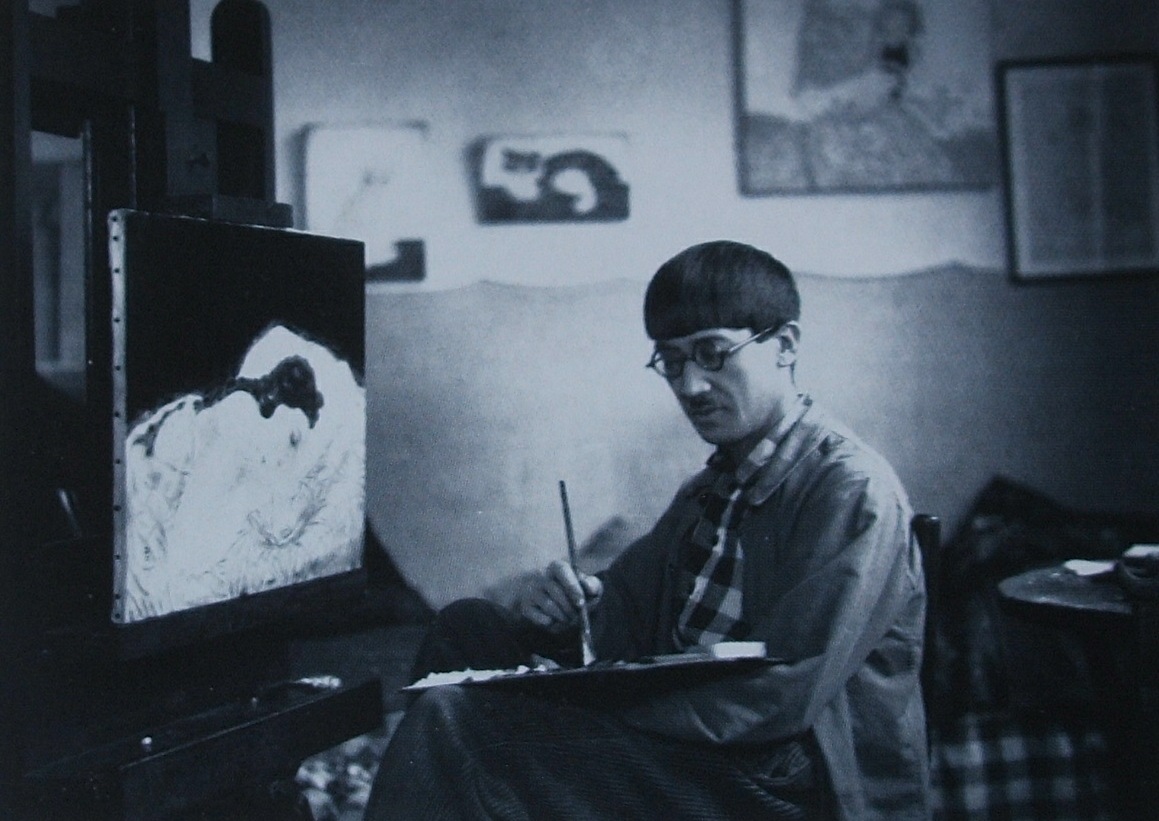
I first came across Foujita's name when I was casually browsing the history of Fauvism and Pablo Picasso. Who is this highly talented (and well-known avant-garde of Montparnesse), only now long forgotten?  

- Foujita in his studio Wikipedia  

After studying art in Japan, Foujita arrived in France in 1913 and befriended with some of the most well-known artists today like Modigliani, Pablo Picasso and Henri Matisse. 

He achieved great success in his early years that he eventually made enough money to install an expensive bathtub with hot running water and that his models often came by for free showers. 


Autoportrait - Tsuguharu Foujita 

Foujita's unique painting style, largely influenced by Japanese prints, emphasized more on line than color, that was a sensation to the Western art circle. Drawings of women and cats upon a simple white background, with powerful, unbroken strokes. 

Thoroughly inspired by his simplistic and strong approach on line and structure, I wanted to create a recipe based on this, and what better way than making the Croquette (Korokke in Japanese) for breakfast? 

The Korokke was introduced in Japan around the early Meiji Restorations and is very similar to the French form of Croquette, a fritter filled with potato and vegetables. For my recipe, I've used sweet potatoes instead, a perfect Western meet Asian rendition, just like Foujita's paintings. 

[Ingredient] Makes about 8 croquettes 

2 Medium size sweet potatoes 
30g of Minced meat 
1/5 of an onion 
Pepper 
Salt 
1 egg 
10g of flour 
10g of breadcrumb
Olive oil 

[Preparation]
Steam the sweet potatoes, mash it up and leave it to cool 

[Procedure]
  1. Cut the onion into small dices 
  2. Stir fry the onions until semi-transparent and flavorful 
  3. Add in the minced meat and stir fry 
  4. Add Salt and Pepper 
  5. Once the above is ready, add this to the mashed sweet potatoes and mix well 
  6. Prepare 3 different dishes with flour in one plate, beaten egg in the next and the breadcrumbs stationed in the third plate. Set up this station so that you can work your way from left to right. 
  7. Roll the sweet potato mix into a small size bowl, and throw it back and forth with your hands to get rid of excessive air. 
  8. Damp the sweet potato ball into the flour, dust off any excessive flour and damp it into egg and then the breadcrumbs. Shape and the flatten the ball as needed. 
  9. Once this is done, heat the oil in a flat pan and you can test the temperature of the oil by adding a little piece of breadcrumb. When it starts sizzling (and not oil is not yet blacken), this is the right temperature (about 170C -180C) to put the croquette in. 
  10. Fry until its golden brown on both sides. 
Hope you enjoy! If you have an artists that you absolutely adore and would love a recipe whipped up for it, let me know :) 


[Michelin Restaurant 1*]: Esszimmer


I love the modern look of this Michelin 1 star restaurant in Salzburg - Esszimmer (which literarily means dining room). The restaurant is led by chef Andreas Kaiblinger, who grew up in Salzburg and is known for casting a creative insight using local produce. 

I love the modern fireplace that they had, which conveys a really warm, welcoming atmosphere. 


So more on the food, I chose the Esszimmer menu ( it was such a debate since I am a fish lover and they had another course that's entirely devoted to fish!)

Esszimmer Menu


Tuna, Wasabi, Jerusalem artichoke and black garlic
-2013 Riesling Johannisberg, Geyerhof, Kremstal

I would say there was a lot of asian influence in this dish, the soft tuna blends in very well with the wasabi and the balsamic vinegar sauce underneath it, and the white foams helps to almost cleanse the palette before your next surprise. There were crunchy garlic pieces and ginger slices as well.


Danube salmon in parsley stock with parsley root and black olives
- 2013 Gruner Veltliner Wechselberg, Birgit Eichinger, Kamptal

I have to say this dish tasted very similar to the another salmon soup that I had at Silvio Nickol, but with denser and stronger in terms of flavor. The salmon was perfectly cooked. A bit too rich for my liking, but it was delicious nonetheless.


Sea bass with apple, celery and beet root
-2013 Grauburgunder, Pioder-Rosenberg, Sudoststeiermark

I love how the crispy skin of the sea bass pairs so well with the acidy from apple and the light fragrance from the beetroot.


Saddle of lamb, braised shoulder of lamb with couscous and ratatouilli
- 2010 Pago de carrovejas Tinto Crianza, Ribera de Duero

Lamb shoulders when done properly, are sweet and succulent, without feeling guilty of all the fattiness it brings. The meat should fall off the bone almost instantly and that was exactly what it did.
It was so tender and soft there wasn't much chewing needed. This is that ultimate finale -- packed with strong, bold flavors that enriches the soul.


Olive strudel and olive sorbet with salt almonds, dried apricot and nougat
- 20 years old Tawny, Dirk von Niepoort, Duoro

I was so full by then that there was no room for dessert...so I cannot comment on this. But the rest of the stuff that I had, everything just synchronizes and builds towards a grand finale.

The Royal Game

Move King from G8 to H7.

The checkered board blurts out an awful sigh as the wooden stools of pawns and knights move motionlessly. Infinite possibilities on a finite board and only the most strenuous thinkers can survive. It's a game of the hunter and a prey, a constant transition between these two roles.

Have not read a novella as grappling as Stephan Zweig’s “The Chess Story” for so long. Having been to Austria not long ago, I’ve always loved to delve into its history beyond architecture, but to learn about a place through the eyes of a local writer. Stephan Zweig is my newfound gem. I have constantly fascinated and amazed by the fluidity and poignancy of Zweig’s writing. His bourgeoise and almost aristocratic flair of language acts like a sheer white chiffon that plays around with the antagonist’s motives and psychological thoughts with ease.

Beyond the surface of a heated game of chess between the world champion and a monarchist lawyer who has not played chess for more than 20 years, hides Zweig’s understanding and delineation of his world of yesterday – the times of Nazi Occupation.

The kind of despair, hopelessness and the mental torment that Dr. B faced is a reflection of Zweig’s own struggle. The sense of nothingness; the lost world of humanity. It is not hard to understand that his idealistic, almost dreamer-like portrayal of his world has collapsed. A pacifist at heart, he could not become the savior of his own country and committed suicide in 1942, only three years before the World War II ended. More importantly, isn’t it portraying the breakdown of a country, a war that was competing against no one else but itself? The “Black” and “White” not only represent the darkness and goodness of mankind, but also how a country can be torn apart by Germans fighting Germans (who are just merely labeled as Jews).


Moving the time frame forward to the 21st century. Are we not constantly faced with the dilemma of to and fro, of persuasion or command, of flight or fight? It is no wonder that Freud considers this book as a “little masterpiece”.