Showing posts with label RECIPE. Show all posts

[RECIPE] Gluten free sticky cinnamon bun

 Cinnamon buns are one of my favorite go-to comfort food, and it isn't easy to come up with a gluten free recipe that gives it enough structure and softness without falling apart when it is being rolled out. The secret ingredient here is tapioca flour! But don't overuse it because it becomes gluey if you add too much to it the dough mix. I hope you have all the success with this recipe and would love to hear back on your results! Enjoy! 


Ingredient 

1 1/2 cup Rice Flour (If you have tapioca flour, feel free to switch out 20g of it) 
1/2 cup Tapioca Flour    
1/2 cup Psyllium Husk 
2 tablespoons of cream 
2 tablespoons of oil
2 tablespoons of sugar 
1 tsp of salt
177ml of warm milk (40celsius), with yeast mixed into it

Filling 1

2-3 tbsp cinnamon 
80g of melted butter 
1/2 cup brown sugar
vanilla essence (optional) 

Filling on top 

2-3 tbsp cinnamon 
1/3 cup of brown sugar 
120ml of whipped cream 
30-50ml of maple syrup 
crushed pecan 

[RECIPE] Gluten Free Bagel


The one thing that I missed the most about a normal diet is having a bagel for breakfast. Whether it is slicing some avocado with a semi-cooked egg or with smoked salmon, bagels is my necessity. I'd always remember those college years where I would order a blueberry bagel with cream cheese to get through my afternoon studies at the library. 

As a baker, I've come to the understanding that gluten-free recipes will never get as close to as a normal recipe. But being a scientist at heart and a chemist at soul, I've gone down the path of different permutation and combinations, iterative testings and finally, a recipe that I can feel proud to present. 

I hope you enjoy this recipe as much as I do. A gluten free diet does not mean needing to give up on a good wholesome bagel!

Ingredient 

420g Rice Flour (If you have tapioca flour, feel free to switch out 20g of it) 
50g Quinoa Flour    
20g Soy Flour 
2 tablespoons (25 g) granulated sugar
1 1/2 teaspoons (9 g) kosher salt
1 cup + 1 tablespoon (8 1/2 fluid ounces) warm water (about 95°F)
6 tablespoons (84 g) olive oil 

Egg wash
2 teaspoons (6 g) instant yeast
Seeds, for sprinkling (optional)

#20分鐘上菜的單身食譜:一個人吃也要很LUSH 的桂丁麻油雞麵線!

下班,即是再累,也不要虐待自己吃微波食物跟盲目低追日劇。


麻油雞麵線 食譜


家是你的避風港,一個人住,一個人煮,絕對不要擔心食物容易吃不完而外食,今天介紹的桂丁麻油雞麵線,只要20分鐘就能輕鬆享受暖呼呼的冬令食補 !

[-----材料-----]   1 人份

麻油  2湯匙 
米酒  100cc 或更多 
水   240cc 
桂丁雞腿肉  5-6塊 
老薑 7-8片 
鹽適量

乾意麵/麵線 
高麗菜 

[-----步驟-----] 
1. 把鍋熱了放麻油,乾炒老薑,直到有香味出現,老薑也稍稍變軟 
2. 把桂丁雞肉炒到封色 (9成變色)後,把火關小再倒入米酒跟水 (TIP: 這是為了以防萬一酒精引爆)
3. 開中火煮滾後,轉中小火燉煮20分鐘 ,加鹽適量調味 
4. 麻油雞快煮好的5分鐘前另外滾水,水滾後把高麗菜跟麵線放入煮5-7分鐘 ,鹽適量(麵軟,高麗菜稍軟)後就可以起鍋
5. 盛


桂丁雞即使只煮了20 分鐘,但湯頭有甘蔗甜的清香,肉質結實甜美,搭配翠綠的高麗菜食用,超出意料的滿足喔! 快來動手一起做吧 

下週也會分享桂丁雞的其他食譜喔!


[RECIPE] Fortune telling with Mille Crepes & Lady M


Every culture has their own way of predicting the future, and understanding the past. From reading coffee residues with Turkish Coffee, to tossing coins in your left hand with Mille Crepe frying, like a curious child, we want a sign that could guide us through the ups and downs. 

Mille Crepes was originally eaten in France on February 2nd, on "Candelmas" and the belief was that if you could catch the crêpe with a frying pan after tossing it in the air with your right hand and holding a gold coin in your left hand, you would become rich that year. 

Apart from sharing some of my insights as to why Lady M's crepe tastes so good, I'm also sharing my own recipe for you try out! 

Ingredient 
150g sifted flour
2 eggs
450 ml milk
10 g sugar
Pinch of salt 
Pinch of baking powder

Olive Oil 

Cream 
250ml of whipping cream 
100ml of mascarpone cheese 
Vanilla beans 
Raisin Rum 
      
Preparation 
1. Sift the flour
2. Let the batter chill for at least 2 hours before use  

Direction 
1. Make a well with the sifted flour 
2. Add in the egg and sugar 
3. Pour in milk at 2 or 3 intersessions and gently mix until smooth 
4. Make sure the pan is hot enough and lightly surface the pan with olive oil, wiping off the excess with a napkin. When there's some gently smoke coming up, pour in the batter. 
5. Tilt and swivel the pan to have a thin layer of batter coated, the thinner you can make it, the better 
6. Each side should take about 15-30sec each (depending on how thin your crepe is). The best way to know is that the side of the crepe starts to curl up, and you know it's time to turn and flip side
7. Continue until you finish using all batter. 
8. Make sure the crepes are cooled, before layering it with cream. 
[------Whipping Cream Preparation -----] 
9. For the preparation of whipped cream, beat the whipping cream until 70% peak (you should have a gent, yogurt like glossy texture, and when you turn over your egg beater, it should have a soft peak). Gently mix in the mascarpone cream with a spatula. You can add some vanilla extract/beans to the mix. 
[--------Assembly ------]
10. Spread layer of crepe with a thinly coated rum and whipping cream, and put the next crepe on top of it until you finish layering all your crepes. 

Tips
1. You can add any season fruits slices other than papaya, pineapple, kiwi.(Or the proteolytic enzymes will start to breaking down the protein and your cream will start to taste bitter). 
2. I like to add layers of my homemade raisin rum (for recipe click here) so that there's a airy accent of the rum. 
3, You can also caramelize the top layer, just by adding some refined sugars and use a fire gun to give that "Creme Brûlée" taste. I believe this is how Lady M's taste is different from others. 

Hope you enjoyed this recipe, and I'd like to hear your comments on how you make yours! :) Happy baking 


[RECIPE] A stroke of luck with Bailey's Coffee Marble chiffon cake


So the origin of the chiffon cake is purely American. It does not derive from some aristocrat fantasy, nor is it invented from some baker's experimental mistake. The first chiffon cake is credited to be invented by Harry Baker in 1927, an insurance salesman who bakes as a hobby and sold his cakes at a fancy Hollywood-goer restaurant. People usually used butter (i.e. in Bundt cake or sponge cake), yet vegetable oil became more affordable during that time, that must have led Harry to try out the cake recipes with a new ingredient that gives off that light fluffy texture. The cake is glorified to be the "best cake in 100 years" especially during 1940-1960, and I believe the recipe also spreaded its influence in Japan with its door opened to western influences after WWII. (Some of the best chiffon cakes now in Japan are originially from Kobe and Hokkaido). 

So here I have my rendition of the chiffon cake recipe, it's heavenly light and fluffy, with a hint of the baileys and espresso. Perfect 

Origin of this dessert: United States
Recommended drink pairing: Viennese coffee or espresso. 

Ingredients 
4 Eggs (separate egg white and yolk) 
Sugar   102g 
Olive oil 45g 
Milk       56g 
Bailey's  10ml 
Flour       102g 
Baking Powder  1.7g 
Dark Chocolate 10g (2 cubes) 
Cocoa Powder  5g 
Espresso   5-10ml 


Preparation 
Preheat oven at 210 celsius 
Sift four 
Separate egg yolk in bowl A and egg white in bowl B 
Gently heat up milk and olive oil in a cup (microwave is ok) for about 50sec 
18cm chiffon cake tin 

Direction
Add 1/2 of sugar into egg yolk in bowl A, mix well 
Add milk and olive oil into A, stir well and add bailey's and cocoa powder 
In a separate bowl B, beat egg white until foamy (like beer foams) before adding 1/3 of the rest of the sugar. At each stage, beat at high speed and add 1/3 of the sugar at each stage, until 70% peak. 
*To check if it is 70% peak, gentily twirl the egg beater and turn it upside down to see if you can form a soft ice-cream like peak with your egg white meringue 
Add 1/3 of the egg white to bowl A, lighly combine with the yolk mixture 
Add all of the flour and baking powder at one go, and use the egg beater to do an up-and down stir, gently folding the mixture from bottom to top, for about 3-4 turns, and change it to a spatula to check that the mixture is well mixed but not overdone 
Add the rest of the egg white meringue in and repeat the folding process, without overdoing it 
In a separate clean bowl, take 1/4 of the mixture and mix it with melted dark chocolate and espresso 
Pour in the mixture into the cake tin, and you can add in the dark chocolate mix into alternatingly to create the marble effect
Make sure hit the tin to get rid of the extra large bubbles
Bake for 31mins at 210c 

*Note: Turn the tin upside down immediately when removed from the oven, to avoid over-shrinking 


[RECIPE]: Paprenjoki and the Hektorovic family


When we first heard that one of Paprenjck's ingredient is "Papor", we thought maybe it is made of Pepper?  Quite different. 

The Paprenjck, is a traditional cake made from honey, oliver oil, prosek and different spices. The world Papor, is an all-inclusive term for "cinnamon, nutmeg and cloves", 

Each family comes with their own individual recipes, and the taste is something between a gingerbread cookie (without the gingertaste) and an English shortcake. 

The dessert has a rustic charm to it, although the key ingredients are not exactly cheap. 
The earliest memory of this cake is mentioned in Petar Hektorovic's poem, where the fishermen brought him: good wine muškatil, sweet wine (prošek), turta (cake), honeycomb, kaškaval cheese, fruit and paprenakov

In his Tvdalj Castle he cultivated his own poultry, silkworms, bees and vegetables. The family also cultivated wheat in the Stari Grad Plain, and made prosek wines in their own tavern inside the Castle. The Hektorovic is pretty much self-sufficient, and althought they don't cultivated exotic herbs like cinnamon and nutmeg, the Stari Grad is is popular transfer point for trading, as it is conveniently located in between ports like Venice and Dubronvik. 


Fascinated by its unique taste and aroma, I searched for it's recipe:

  • The night before, boil a kilogram of honey. When the honey boils and forms froth, remove it with a spoon. Grind the cloves on a board with a wooden hammer and put them into the heated prošek. Fry the saffron, crumble it and put this into the heated prošek as well. 
  • Add a quarter of a litre of olive oil into the honey. Filter the prošek with saffron together with the prošek with cloves. The total amount of prošek added should be a quarter of a litre. 
  • Add a pinch of cinnamon, nutmeg and at the end flour with a bit of baking soda to this paste. The quantity of flour is determined by the softness of the paste. Leave to stand for half an hour. Place part of the paste onto a board and add more flour. Cut it into equal pieces. Knead each piece by hand and form small balls. 
  • Place the paste into a greased baking tray and form the paprenjok by hand. Bake at 200 ̊C until it darkens. 
  • It can be decorated as soon as it is cool. Add 150 g of icing sugar to one egg yolk to create icing and then decorate the paprenjoki. 
The proedure looks very much like how you would bake a cookie, except they've used olive oil instead of beating air into butter for that creamy texture. Saffron isn't exactly an inexpensive ingredient, and I wonder how people could afford it back then? 
Perhaps the value of saffron is very different from now. 

Looking at an age-old recipe is always fascinating to me, and perhaps gives a glimpse to how the maritime trade has larlgely increased the variety in tastes and aroma in daily culinary. 

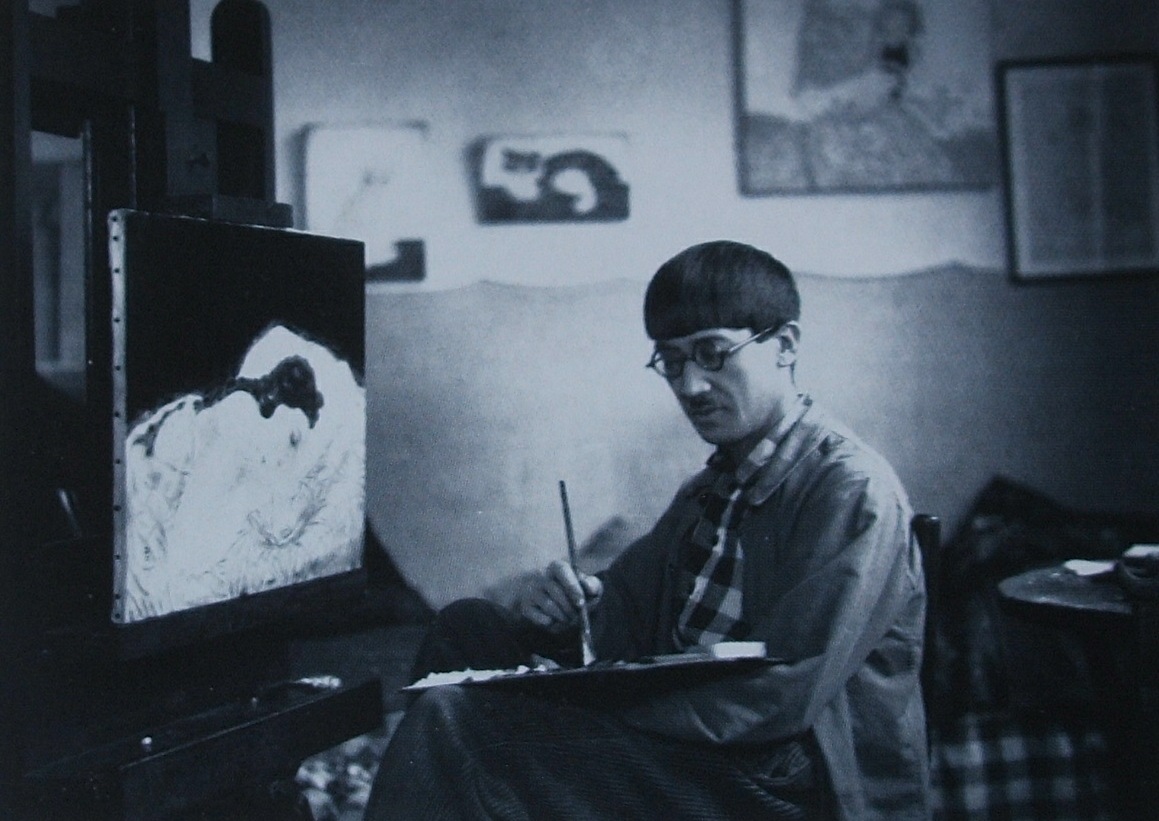
[RECIPE] Tsuguharu Foujita Breakfast x Croquette

I first came across Foujita's name when I was casually browsing the history of Fauvism and Pablo Picasso. Who is this highly talented (and well-known avant-garde of Montparnesse), only now long forgotten?  

- Foujita in his studio Wikipedia  

After studying art in Japan, Foujita arrived in France in 1913 and befriended with some of the most well-known artists today like Modigliani, Pablo Picasso and Henri Matisse. 

He achieved great success in his early years that he eventually made enough money to install an expensive bathtub with hot running water and that his models often came by for free showers. 


Autoportrait - Tsuguharu Foujita 

Foujita's unique painting style, largely influenced by Japanese prints, emphasized more on line than color, that was a sensation to the Western art circle. Drawings of women and cats upon a simple white background, with powerful, unbroken strokes. 

Thoroughly inspired by his simplistic and strong approach on line and structure, I wanted to create a recipe based on this, and what better way than making the Croquette (Korokke in Japanese) for breakfast? 

The Korokke was introduced in Japan around the early Meiji Restorations and is very similar to the French form of Croquette, a fritter filled with potato and vegetables. For my recipe, I've used sweet potatoes instead, a perfect Western meet Asian rendition, just like Foujita's paintings. 

[Ingredient] Makes about 8 croquettes 

2 Medium size sweet potatoes 
30g of Minced meat 
1/5 of an onion 
Pepper 
Salt 
1 egg 
10g of flour 
10g of breadcrumb
Olive oil 

[Preparation]
Steam the sweet potatoes, mash it up and leave it to cool 

[Procedure]
  1. Cut the onion into small dices 
  2. Stir fry the onions until semi-transparent and flavorful 
  3. Add in the minced meat and stir fry 
  4. Add Salt and Pepper 
  5. Once the above is ready, add this to the mashed sweet potatoes and mix well 
  6. Prepare 3 different dishes with flour in one plate, beaten egg in the next and the breadcrumbs stationed in the third plate. Set up this station so that you can work your way from left to right. 
  7. Roll the sweet potato mix into a small size bowl, and throw it back and forth with your hands to get rid of excessive air. 
  8. Damp the sweet potato ball into the flour, dust off any excessive flour and damp it into egg and then the breadcrumbs. Shape and the flatten the ball as needed. 
  9. Once this is done, heat the oil in a flat pan and you can test the temperature of the oil by adding a little piece of breadcrumb. When it starts sizzling (and not oil is not yet blacken), this is the right temperature (about 170C -180C) to put the croquette in. 
  10. Fry until its golden brown on both sides. 
Hope you enjoy! If you have an artists that you absolutely adore and would love a recipe whipped up for it, let me know :) 


[RECIPE] Andy Warhol Breakfast

When I am traveling, I want to be inspired by things surrounding me. Being an avid food lover and cook, it's always sort of second nature for me to whip up new recipes from local inspirations. 
Obviously, Andy Warhol isn't exactly a "local attraction", but having lived in Pittsburgh, I have travelled the world to see how people have revered Andy Warhol's reckless creativity. Whether it is in Prague, Vienna, or London I have seen how he is constantly brought up as an inspiration to new artists. 

So here is my morning breakfast - a tribute to the pop art artist: Cheesy salmon and blueberry greek yogurt with Chupa Chips. 

At Gallery of Art, Prague 


[RECIPE] Wiener Schnizel


Ingredient 
3-4 skinless boar loin medallions (or pork) 
1 egg, lightly beaten 
salt 
20g of cake flour 
20g of breadcrumbs
Oliver oil
Lemon slices 
Honey 

Preparation 
Pound the meat into a flat cutlet, about 1/4 inch thick 
Slice up lemon and dip into honey overnight 

Direction 
  1. Set up the station such that you have a shallow bowl of flour > egg > breadcrumb
  2. Add the salt and any other seasoning (pepper if needed) to the beaten egg 
  3. Heat the pan with some olive oil at medium heat, and make sure it is hot enough (put a bread crumb into the pan and when it starts bubbling and sizzling, this is the right temperature) 
  4. Dredge the cutlet into flour (removing any excess), then egg, and finally breadcrumbs and put into the heated pan at medium heat
  5. Fry until they are golden brown on each side (about 4 mins each) 
  6. Serve with lemon slices and Erdäpfelsalat (Viennese Potato salad) 

[RECIPE]: Viennese Baked Fennel with Parmesan Cheese


Ingredient
1 Fennel Bulb
Salt
Pepper
10g Butter or Olive Oil
5g Grated Parmesan
5g Breadcrumbs


Direction

  1. Preheat oven at 230C 
  2. Slice the fennel bulb into thin layers (without cutting through the root), boil until tender 
  3. Drizzle with salt, pepper and olive oil and bake for 30mins 
  4. Sprinkle over parmesan and breadcrumb and bake (for 1 min or so) until golden brown